Child Protection and Safeguarding
Safeguarding
At Melbourne Junior School, all staff are committed to safeguarding and promoting the welfare of children and we expect all staff and volunteers to share this commitment. We have in place a robust child protection and safeguarding policy and all Staff, Governors and Volunteers have a clear understanding regarding abuse and neglect in all forms, including how to identify, respond and report.
The school has a Child Protection and Safeguarding Policy which can be found on this page. We use this policy to guide our actions and to ensure that we are keeping children safe by following agreed procedures.
There may also be times when adults are concerned about children in the community. Safeguarding is everyone's responsibility so please do act on your concerns. You can contact:
Derbyshire County Council's Child Protection department on 01629 533190 or The NSPCC on 0808 800 5000.
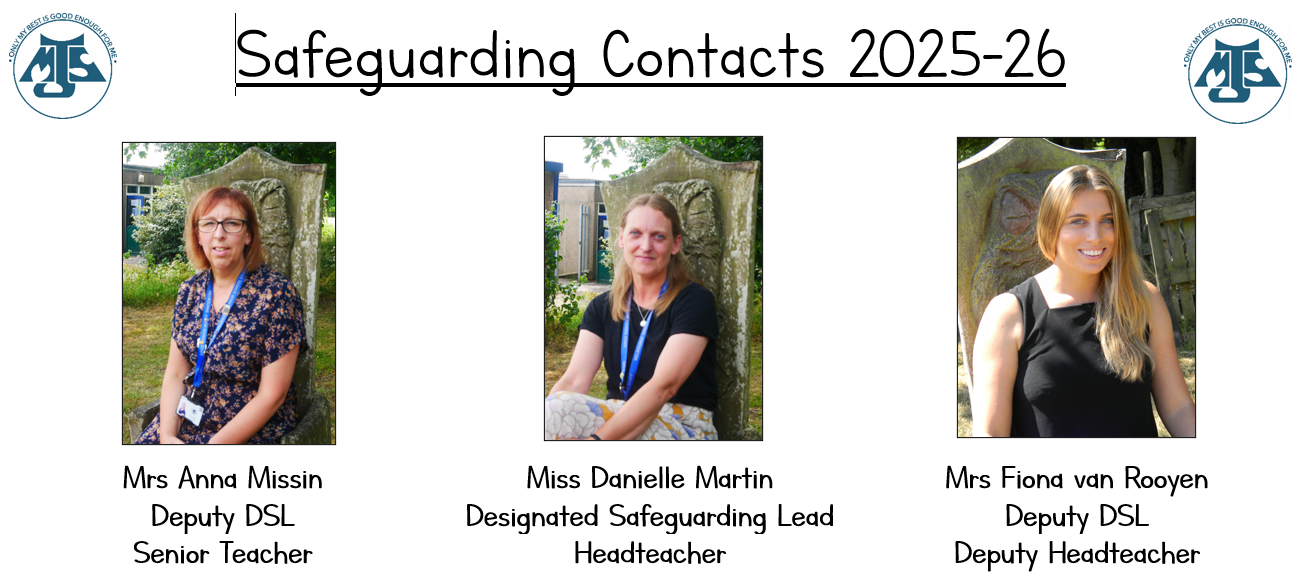
If you have a concern about the safety of any Melbourne Junior School child, you can also contact our school safeguarding team. During school hours, a Designated Safeguarding Lead (DSL) will always be on-site or contactable by phone.
Early Help
Early Help is the identification of, and response to, emerging problems for children, young people and their families. It is a way of working that supports families, children and young people to overcome difficulties and build their resilience so that problems do not escalate. Supporting children and families to thrive, live and engage happily in their communities.
Effective delivery of Early Help is based on a clear understanding of local needs and appreciation of local conditions influencing the lives of children, young people and their families. Schools and locally based professionals contribute to the development of a rich local Early Help offer; working across domains of health, education, community safety and the voluntary sector.
Derby and Derbyshire Safeguarding Children Partnership has developed policies, procedures and guidance to support all professionals to provide Early Help. This includes the Early Help Assessment (EHA) and Team Around the Family (TAF) processes. They provide support for schools to initiate their Early Help work; Early Help advisors and youth and community engagement workers can provide local support to connect with community based services.
If a child’s needs require a more targeted support package, then schools can complete the online request for support form with Starting Point. This request will be triaged and a decision will be made on how best to support the child and family.
Teams across the county focus on:
- 0-5 year olds including a children's centre offer helping families with bonding and attachment during pregnancy and infancy, development milestones including speech and language and school readiness.
- Family and youth support, providing parenting support in groups or at home and targeted youth groups in community settings.
Melbourne Junior School uses Children First Derby, to support families in need of early help support.
Please contact Miss Martin at the school if you would like more information.
Our Safeguarding Governor is: Ms Jackie Edwards - jackie.edwards@melbourne-jun.derbyshire.sch.uk
Domestic Violence:
If you're a parent or carer concerned about a child affected by domestic abuse speak to the designated safeguarding lead at the child’s school. You can also visit the Operation Encompass website for more details of how schools can support children in these circumstances.
Prevent
The Prevent Duty is working positively to protect young people from radicalisation.
You may have heard about the Prevent Duty, which aims to prevent young people from being radicalised by, for example, far right extremists or religious extremists.
In school we have a duty to care for the children and take note of any child who is at risk of radicalisation, regardless of their background. We also have to take steps to help prevent children being exposed to extremist ideas. Our overriding priority is that children feel safe and able to demonstrate tolerance towards all cultures and religions, even when personal views may be different.
Talking about terrorism: tips for parents
Children are exposed to news in many ways, and what they can see can worry them. Our advice can help you have a conversation with your child:
- listen carefully to a child’s fears and worries
- offer reassurance and comfort
- avoid complicated and worrying explanations they could be frightening and confusing
- help them find advice and support to understand distressing events and feelings
- children can always contact Childline free and confidentially on the phone and online.
- it’s also important to address bullying and abuse following terrorist attacks.
- some children my feel targeted because of their faith or appearance.
Look for signs of bullying, and make sure that they know they can talk to you about it. Often, children might feel scared or embarrassed, so reassure them it’s not their fault that this is happening, and they can always talk to you or another adult they can trust. Alert your child’s school so that they can be aware of the issue.
Dealing with offensive or unkind comments about a child’s faith or background.
If you think this is happening, it’s important to intervene. Calmly explain that comments like this are not acceptable. Your child should also understand that someone’s beliefs do not make them a terrorist. Explaining that most people are as scared and hurt by the attacks as your child is. You could ask them how they think the other child felt, or ask them how they felt when someone said something unkind to them. Explain what you will do next, such as telling your child’s school, and what you expect them to do.